

The primary raw materials for wood-plastic composite (WPC) doors are PVC resin and high-quality, ultra-fine wood powder. The PVC resin used is typically of medical grade, while the wood powder undergoes rigorous pretreatment-including classification, grinding, drying, and encapsulation (coating). A specific proportion of auxiliary agents-such as stabilizers, foaming agents, and modifiers-is incorporated into the formulation, with all components mixed according to a precise ratio. WPC doors are manufactured using a molding process, where the material is extruded in a single step under high-temperature, high-pressure, and vacuum conditions. As no adhesives (glues) are used during production, the generation of harmful substances like formaldehyde and benzene is fundamentally avoided. Advanced production equipment-such as sophisticated mixing systems and high-torque twin-screw extruders-is largely imported from abroad. These highly automated systems are specially modified to facilitate the formation of a uniform "skin" on the inner and outer surfaces of the WPC material, ensure consistent foaming, prevent the carbonization of wood powder, and guarantee stable product quality. For surface finishing, thermal transfer technology (e.g., using UV thermal transfer film) is primarily employed; under high temperature and pressure, wood-grain patterns are instantly transferred onto the substrate, creating a realistic wood-like appearance that is paint-free and uniform in color. Some products may also undergo surface treatment via thermal vacuum forming (thermoforming) or lacquer-coating processes.
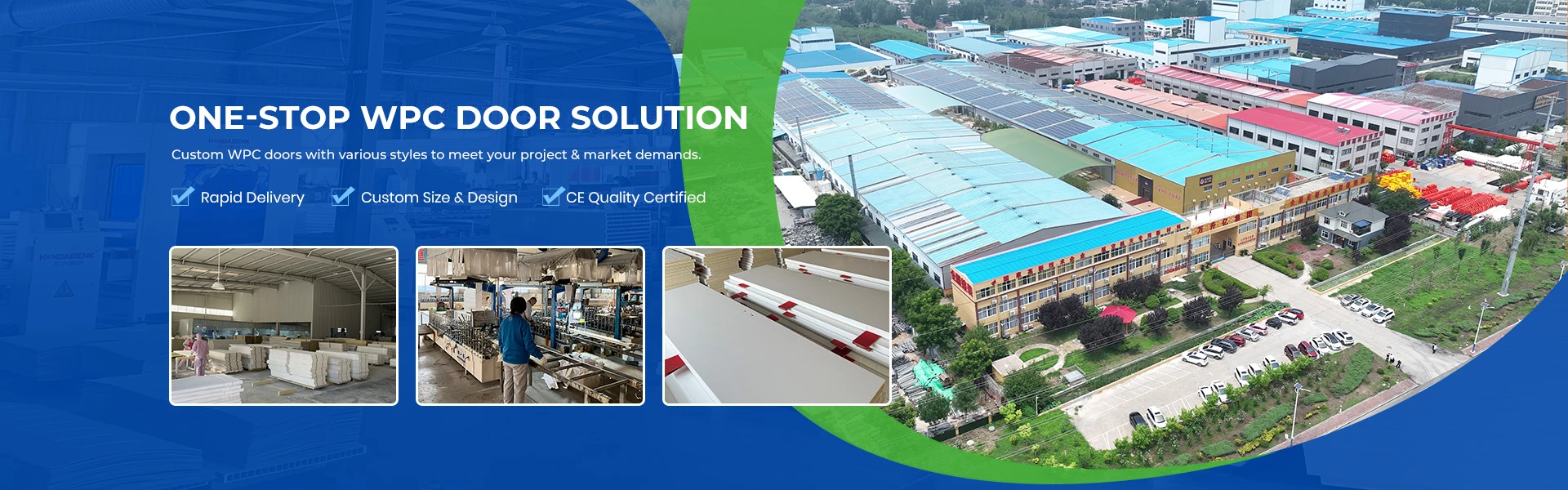
Manufacturing Process Of Wood-Plastic Composite (WPC) Doors
Oct 02, 2026
Leave a message
Send Inquiry