

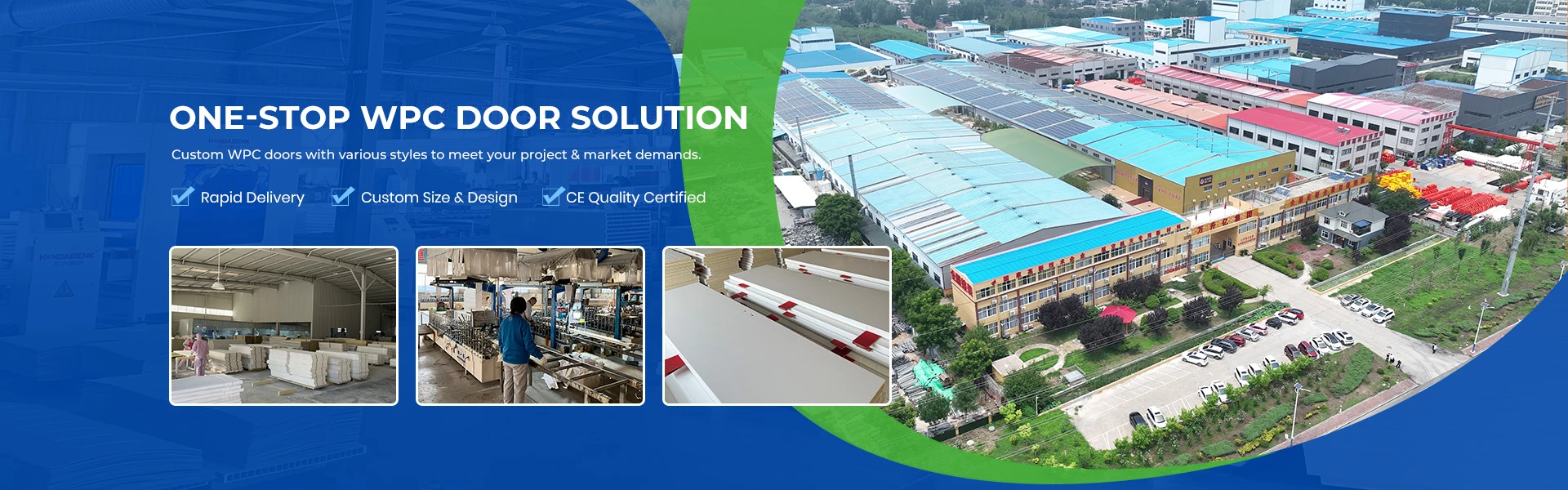
WPC is a novel composite material developed in recent years. It is lightweight, rigid, resistant to acids and alkalis, waterproof, insect-proof, and environmentally friendly. It can be processed-nailed, drilled, planed, sawn, glued, and painted-much like wood, while also offering the moldability and surface-printing capabilities of thermoplastic materials. Currently, it is widely used in sectors such as construction materials, municipal infrastructure, and packaging. Beyond these advantages, its tactile quality closely resembles that of natural wood, suggesting significant potential for its application in the furniture industry.
Measuring door openings for WPC doors: For height, use the lowest measurement; for width, use the narrowest measurement; and for wall thickness, use the greatest measurement.
Manufacturing process for WPC doors: The primary raw materials-wood flour and resin powder-are blended with specific additives (such as stabilizers, plasticizers, foaming agents, modifiers, and lubricants). This mixture is thoroughly combined and then extruded into shape using a molding process under high temperature and high pressure.
Surface treatment for WPC doors: Surfaces can be finished using techniques such as lacquer coating or thermal transfer printing.
WPC doors feature an integrated hollow-cavity structure, which enhances the door's strength and stability while providing sound insulation and thermal retention. This design also significantly reduces raw material consumption-offering multiple benefits that are difficult to achieve with traditional manufacturing methods.
From raw materials and production to final surface finishing, WPC doors require no adhesives (such as glue) and contain no toxic or hazardous substances like formaldehyde or toluene, making them an eco-friendly, healthy, and green product.
WPC doors utilize a "snap-fit" quick-installation system. The door frame components are connected using L-shaped metal brackets, and the entire frame is secured to the wall using wooden battens or expanding foam. Hinges and locks are then installed following standard procedures, making the process highly convenient.
As a new type of material, WPC possesses characteristics of both wood and plastic in terms of its production and molding processes:
① Ease of processing: WPC materials exhibit excellent mechanical properties and high workability. ② High Strength: Wood-plastic composites (WPC) possess elasticity comparable to that of pure plastics, while offering greater hardness.
③ Superior Stability: Compared to traditional wood, WPC materials offer a longer service life, excellent resistance to water and corrosion, and exceptional overall stability.
④ Tunable Properties: The characteristics of WPC materials can be adjusted; by incorporating specific additives, manufacturers can modify the material's density and strength, while also enhancing properties such as resistance to aging, static electricity, insect damage, decay, and combustion.
⑤ Low-Carbon and Eco-Friendly: A primary advantage of WPC is its ability to incorporate recycled waste materials, facilitating the effective regeneration and rational use of resources. Furthermore, through specialized processing, these materials are rendered free from the release of harmful gases like formaldehyde, making them a truly eco-friendly, next-generation material.
Given these numerous advantages, WPC materials are widely utilized across a diverse range of sectors-including automotive interior design, railway sleepers, construction, packaging, landscaping, and both indoor and outdoor design-as well as in the field of furniture design.