

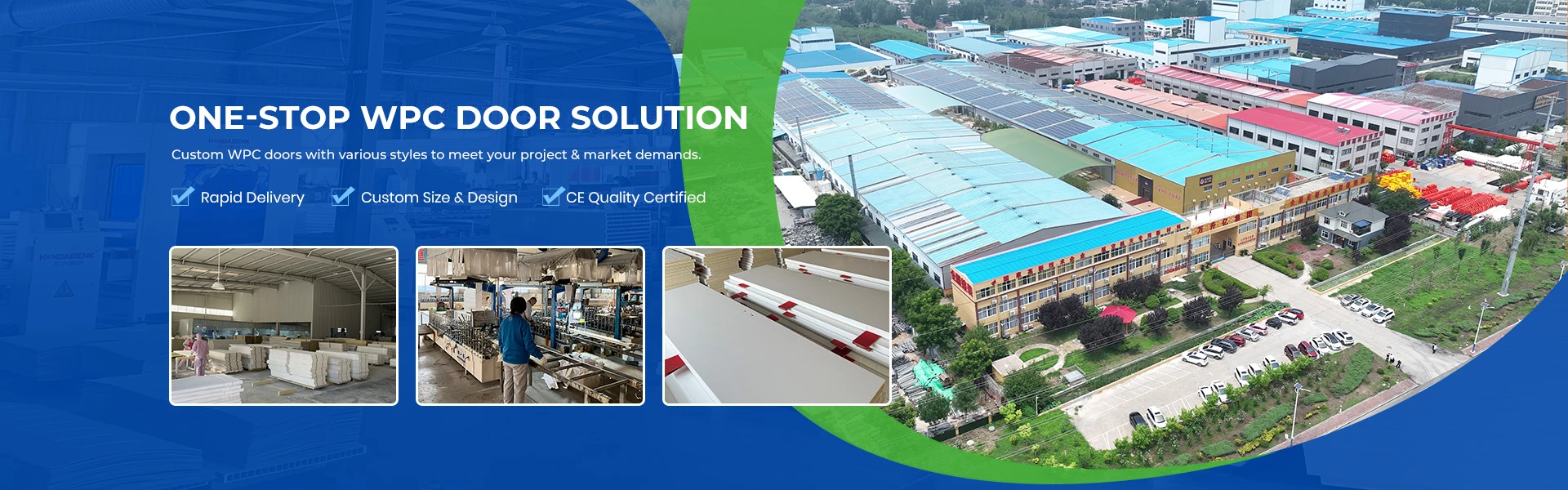
WPC doors are manufactured using a molding process that combines ultra-fine wood particles with polymer epoxy resins. This results in a product that possesses the desirable characteristics of both wood and plastic, effectively mimicking the appearance of natural wood. Because no adhesives are used in the raw materials or the manufacturing process, these doors do not emit harmful substances such as formaldehyde, benzene, ammonia, or ethyl acetate, making them an excellent modern alternative to traditional wood. The WPC formulation incorporates specific additives-including thickening agents, foaming agents, and modifiers-which are precisely blended to ensure the high quality of the foamed panels. WPC doors are designed with a quick-install structure; the door frame is easy to assemble, and the trim (casing) connects to the frame via a snap-fit mechanism, eliminating the need for pneumatic nails or adhesives.
Proper preparation is essential before installing interior doors. This includes gathering all necessary materials and hardware, as well as ensuring the required installation tools are on hand. Beyond these basics, the door opening must be adjusted, and the door frame pre-assembled. To adjust the door opening, wooden wedges are driven into the walls on three sides, and wooden blocks of the appropriate thickness are then nailed onto these wedges to achieve the precise dimensions required. As for the door frame, the side jambs and the head jamb are joined using connecting bolts. Once these preparations are complete, the actual installation process can begin.
The inspection and acceptance of interior doors is a meticulous task. Every aspect-from the overall appearance to the details of each joint-must be carefully examined to ensure the door functions correctly and to avoid the need for future rework or reinstallation.
As the primary entry points within a home, interior doors significantly impact daily life. Any errors during installation can lead to the need for reinstallation, which is time-consuming and disruptive to one's routine. Furthermore, installation and acceptance signify the completion of the installation project. If the inspection is not thorough, problems will be difficult to resolve. After installation, the paint film on the interior door surface should be intact. This allows for a second inspection of the door's quality, checking for a glossy finish, absence of bubbles or other obvious quality issues, and no damage. The interior door and door frame should be made of the same material, with coordinated colors, and the color difference between the veneer and the wood trim should not be too significant. If the door panel or door frame is not properly aligned vertically during installation, it will cause the interior door to not close properly, increasing the workload. During acceptance, ensure that the interior door and door frame are vertical, without deformation, and fit perfectly within the frame. Gaps may indicate that the door frame was not perpendicular to the ground or that the planing was inaccurate; these issues must be resolved before the installation project is complete. After installation, the door frame should be free of hollow spots and bends. You can gently tap the side panel of the door frame to listen for hollow sounds. If there are hollow sounds, it means that no base material such as plywood was used during installation. In this case, the door is not stable and is prone to accidents later. It should be removed, the base material should be used, and the door should be reinstalled. The door frame uprights should be perpendicular to the ground and should not be bent.